The Essential Guide to Digital Brand Protection: Strategy, AI Monitoring, and Enforcement for MSMEs in India

Why Digital Brand Protection is the New Business Imperative
The rapid shift to e-commerce and digital platforms has transformed every brand’s digital presence into its most valuable asset—and simultaneously, its most vulnerable one. For businesses in India, particularly MSMEs and startups, the digital marketplace represents both an unprecedented opportunity for growth and a relentless battleground against intellectual property theft.
The ease with which someone can copy a logo, replicate a product listing, or impersonate a brand means that a thriving business can be undermined by counterfeits and impersonators overnight. What took you months or years to build—your reputation, your customer trust, your brand equity—can be diluted in days by bad actors operating from anywhere in the world.
Digital Brand Protection encompasses far more than just registered trademarks. It’s a comprehensive ecosystem that includes your registered trademarks, copyrights for your website design and visual assets, domain names across multiple extensions, and your online reputation reflected in reviews and social sentiment. For MSMEs in India, where the digital space has become the primary avenue for growth, protecting these digital assets isn’t optional—it’s essential for survival.
“We were zero. From zero we started. Remember, one day everyone becomes zero. Till that time, walk like heroes.” — Ethical Founder
This guide outlines a robust, four-pillar strategy—Informed Risk Management, Technology Adoption, Legal Enforcement, and Ethical Practice—critical for MSMEs and startups to survive and thrive in the competitive Indian digital marketplace. We’ll also show you how custom AI automation can drastically reduce costs and response times in this ongoing battle for brand integrity.
Understanding the Modern Brand Risk Landscape from an MSME Perspective
Shifting from Reactive Defense to Strategic Brand Risk Management
The traditional approach to brand protection—waiting until you spot an infringement, then sending an expensive cease and desist letter through a lawyer—is both financially unsustainable and strategically ineffective for growing businesses. For MSMEs operating on tight budgets and even tighter timelines, reactive defense is a losing game.
Strategic Brand Risk Management represents a fundamental mindset shift. It views brand security as an essential, ongoing business function rather than a one-off legal expense that you handle only when a problem becomes too large to ignore. This approach involves continuous threat detection, regular asset auditing, and establishing clear internal protocols for handling brand misuse before it impacts your revenue or erodes consumer trust.
The journey begins with identifying all your valuable intellectual property assets. This includes your brand name and logo, your product packaging design, your unique digital content, your proprietary processes, and even the distinctive way you communicate with customers. Once identified, you need to prioritize their protection based on business impact. A counterfeit product using your brand name on Amazon poses a more immediate threat than someone using a similar colour scheme on Instagram.
Setting up ongoing watch services allows you to spot applications for similar marks early—when they appear in the Trademark Journal—giving you a window to file oppositions before competing marks get registered. Similarly, monitoring domain registrations globally helps prevent cybersquatting before domain squatters establish a strong position.
The true cost of inaction extends far beyond lost sales. It includes the irreparable erosion of consumer trust when customers receive inferior counterfeit products bearing your brand name, the damage to your authority in the market when competitors dilute your positioning, and the eventual impossibility of enforcing your rights once infringement becomes widespread and normalised.
The Unique Vulnerabilities Facing MSMEs and Startups
Small and medium enterprises face a distinct set of challenges that make them particularly attractive targets for intellectual property theft:
Limited Resources and Bandwidth
Most MSMEs lack the budget for comprehensive global trademark registration across all relevant classes and jurisdictions. A startup might secure protection in India but remain vulnerable in emerging markets where their products gain unexpected traction. The cost of monitoring every e-commerce platform, social media channel, and domain registration 24/7 is prohibitive when you’re operating with a small team wearing multiple hats.
Investor Perception and Valuation Impact
Unprotected intellectual property is viewed as a major financial and operational liability during funding rounds. Savvy investors conducting due diligence will immediately flag gaps in IP protection, and these gaps directly impact company valuation. A startup with a strong product but weak IP protection may struggle to secure funding, while a competitor with better legal groundwork secures better terms.
Internal Threats and Digital Hygiene
MSMEs often face a higher risk of IP leakage due to limited employee training on digital hygiene and weak access controls for proprietary information. When a small team has broad access to trade secrets, design files, and strategic documents, the risk of inadvertent disclosure or deliberate theft increases significantly. Unlike large enterprises with segregated information systems and strict need-to-know protocols, small businesses often operate with everyone having access to everything.
Dependency on External Legal Counsel
Without dedicated in-house legal teams, MSMEs must rely on external counsel for every dispute, every trademark application, and every enforcement action. Legal fees accumulate rapidly, and the per-incident cost structure means that each infringement becomes a financial calculation—is the cost of enforcement worth more than the immediate revenue loss? This calculation often results in inaction, which emboldens infringers.
Where Risks Emerge: E-commerce and Social Media Hotspots
Counterfeiting and Brand Dilution
This represents the most significant threat to MSMEs in the Indian digital ecosystem. Counterfeiting involves the unauthorised use of your brand names, logos, or product packaging on platforms like Flipkart, Amazon, Meesho, and countless smaller marketplaces. The counterfeiters typically list inferior quality goods at lower prices, which serves a dual purpose for them—they make quick profits while simultaneously diluting your brand’s quality perception in the market.
When a customer purchases what they believe is your product but receives a counterfeit, they don’t blame the counterfeiter—they blame your brand. The negative review goes on your legitimate listing. The customer support complaint comes to your team. The reputation damage is yours to manage, even though you never manufactured or sold the inferior product.
Unauthorised Distribution and Grey Market Goods
Even when products aren’t counterfeit, unauthorised sellers create substantial problems. Grey market goods—genuine products sold through unofficial distribution channels—often reach customers without proper warranty support, customer service, or quality assurance. These products may be older stock, products meant for different markets with different specifications, or items diverted from legitimate distribution chains.
The result is poor customer experience, warranty disputes, and pricing wars that erode your margins. When authorised retailers see your products available cheaper through unauthorised channels, they lose incentive to maintain proper inventory levels or provide quality customer service.
Reputation Damage Through Digital Manipulation
The rapid spread of misinformation through fake reviews, sponsored negative posts, and targeted smear campaigns on platforms like Twitter, Instagram, and LinkedIn can devastate a brand’s reputation before you even become aware of the attack. Competitors or malicious actors can deploy coordinated campaigns that create the impression of widespread customer dissatisfaction, safety concerns, or ethical issues.
These campaigns are particularly dangerous because they exploit the human tendency to believe negative information and the algorithmic tendency of social platforms to amplify engagement-generating content—and nothing generates engagement like controversy.
Shadow IP and Impersonation Schemes
Impersonator accounts and profiles represent a sophisticated threat that goes beyond simple brand confusion. Bad actors create official-looking pages, accounts, or websites that impersonate your brand for purposes of phishing customer data, misdirecting payments, running investment scams, or simply harvesting followers to later sell or repurpose for other fraudulent activities.
These shadow presences are particularly dangerous because they often target your existing customers—people who already trust your brand and are therefore more likely to engage with content that appears to come from you.
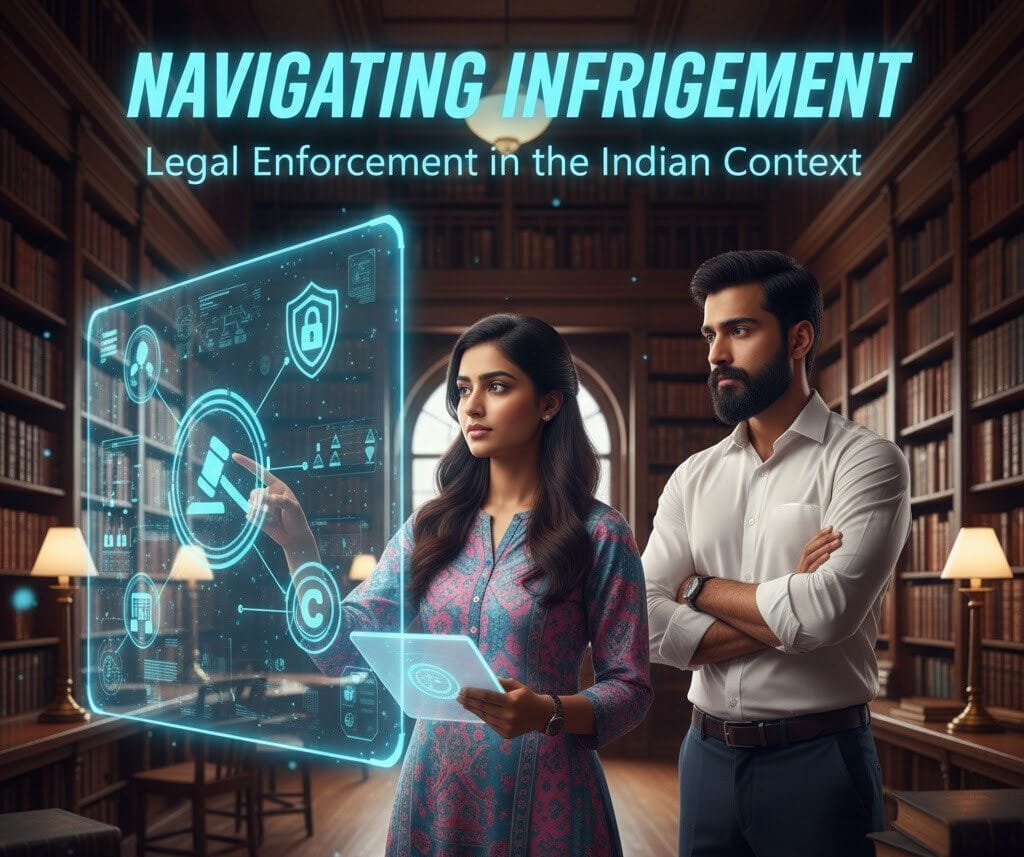
Navigating Infringement and Legal Enforcement in the Indian Context
Strategic Approaches to Combating Trademark Infringement and Counterfeiting
Enforcement must be strategic, balancing cost, speed, and deterrent effect. Understanding your options allows you to choose the most appropriate response for each situation:
| Enforcement Method | Advantages | Disadvantages | Typical Response Time |
|---|---|---|---|
| Platform Takedown | Fastest and most cost-effective initial solution; High success rate when evidence is clear | No legal precedent created; Requires continuous monitoring as infringers often return | 24-72 hours |
| Legal Cease & Desist Letter | Establishes formal legal record; Creates stronger deterrent than platform reports; Can be used as evidence in future proceedings | Requires legal counsel; Can be ignored by determined bad actors; Cost per incident adds up | 1-2 weeks |
| Police Action (Criminal Complaint) | Highest deterrent value through seizure of goods and potential arrests; Targets physical supply chain; Creates public record | Most expensive option; Requires significant evidence compilation; Court involvement extends timeline | 1-3 months |
Platform Takedown: Your First Line of Defense
Utilising platform-specific IP infringement reporting mechanisms represents the fastest route for immediate relief. Amazon Brand Registry, Flipkart’s Brand Authorization Programme, and similar initiatives on other marketplaces provide streamlined reporting systems designed to handle high volumes of infringement claims efficiently.
However, relying solely on platform takedowns creates a game of perpetual Whack-a-Mole. Infringers understand that platform actions are limited to the specific listing reported—they don’t create lasting consequences. A determined counterfeiter will simply create a new seller account or list the same infringing products under slightly different titles or images.
True defense requires leveraging the Indian Trade Marks Act, 1999, to issue comprehensive cease and desist letters that establish legal grounds for broader action. These letters should clearly identify your registered trademark, demonstrate the infringement with specific evidence, outline the legal consequences of continued infringement, and demand immediate cessation of all infringing activities across all platforms and channels.
When Criminal Action Becomes Necessary
For serious counterfeiting offenses—particularly those involving physical goods that could pose safety risks or those operating at significant commercial scale—filing a criminal complaint under the Indian Penal Code becomes not just an option but a necessity for effective deterrence.
Criminal action sends an unambiguous message to infringers and their networks: your brand protection is backed by the full force of law enforcement. The threat of physical seizure of inventory, arrests, and criminal records creates a deterrent effect that civil litigation alone cannot achieve. This approach is particularly effective when dealing with organised counterfeiting rings that operate across multiple platforms and maintain physical inventory.
Tackling Cybersquatting and Domain Abuse in the .IN Space
Domain abuse specifically in the highly competitive .IN space can be crippling for businesses whose primary market is India. When someone registers your brand name as a domain—particularly with the .in, .co.in, or .net.in extensions—they effectively hold your digital identity hostage. They can redirect your customers, damage your search engine rankings, demand ransom payments, or simply sit on the domain to prevent you from using it.
Your primary line of defense is defensive domain registration—securing all critical digital identities before they become targets. This means registering not just your primary brand name, but common misspellings, variations with hyphens or numbers, and extensions across multiple top-level domains. Similarly, securing your brand name across key social media platforms prevents impersonation and maintains consistency in your digital presence.
The INDRP Process: Reclaiming Your Domain Identity
When domain infringement occurs, the Indian Dispute Resolution Policy (INDRP) administered by the National Internet Exchange of India (NIXI) provides a streamlined arbitration mechanism specifically designed for .IN domains. The INDRP process is significantly faster and more cost-effective than traditional litigation.
The process involves filing a complaint with NIXI, which includes:
- Proof of your trademark rights (registration certificate, evidence of use)
- Demonstration that the domain name is identical or confusingly similar to your trademark
- Evidence that the domain registrant has no legitimate rights or interests in the domain
- Proof of bad faith registration or use (typically through evidence of blocking, selling attempts, or impersonation)
Following complaint filing, an arbitrator is appointed who reviews the evidence and makes a binding decision within 45 days. The key to success in INDRP proceedings lies in documentation—clear evidence of your prior rights, date of first commercial use, and the strength of your trademark registration.
Successful INDRP cases demonstrate that early registration of your trademark, maintaining clear records of commercial use, and acting promptly when domain infringement occurs significantly increase your chances of domain reclamation.
Future-Proofing IP: Anticipating Digital Disputes Beyond 2025
The digital landscape continues to evolve at an accelerating pace, creating new venues for brand exploitation and new challenges for protection:
Virtual IP and the Metaverse Economy
The rise of virtual worlds, gaming environments, and metaverse platforms introduces entirely new categories of trademark disputes. Virtual goods, NFTs, branded experiences in gaming environments, and digital avatars wearing branded clothing all create opportunities for infringement in spaces that didn’t exist five years ago.
Forward-thinking brands need to establish their presence in these spaces now—securing virtual trademarks, understanding blockchain-based IP protection, and claiming their brand identity in major metaverse platforms before squatters do. The cost of early registration is minimal compared to the cost of domain disputes and brand recovery after someone else has established a presence using your brand.
Deepfake Technology and AI-Generated Impersonation
Artificial intelligence has reached a point where creating convincing video or audio impersonations of brand founders, spokespeople, or celebrities associated with your brand requires minimal technical skill. Malicious actors can create deepfake videos featuring your founder apparently endorsing investment schemes, announcing fake product launches, or making controversial statements that damage your reputation.
Protection requires a combination of technical measures (watermarking legitimate content, establishing verification systems), legal preparation (understanding how existing laws apply to AI-generated content), and rapid response capabilities (detecting and countering deepfakes quickly before they achieve viral spread).
Proactive Registration for Emerging Technology Classes
The importance of filing trademark applications in new classes cannot be overstated. If your business currently operates in physical goods manufacturing, you should nevertheless consider registration in Class 9 (downloadable electronic goods) and Class 42 (software as a service) to protect your brand’s potential expansion into digital products.
The relatively low cost of filing additional class registrations represents an insurance policy against future disputes and provides flexibility for business model evolution without creating IP gaps.
Implementing AI and Automation for Continuous Brand Monitoring

Why Manual Monitoring is Obsolete and Unsustainable
Traditional, keyword-based monitoring performed by human analysts cannot scale to match the volume and velocity of the modern digital ecosystem. An e-commerce brand might need to monitor hundreds of marketplaces, thousands of seller accounts, millions of product listings, and an unlimited number of social media posts, blog articles, and website mentions.
Manual monitoring is not just expensive—it’s fundamentally inadequate. Human analysts work business hours. They get tired. They miss subtle variations. They cannot simultaneously monitor content in multiple languages across different platforms while also analyzing sentiment, assessing threat levels, and prioritising response actions.
Modern AI-driven brand protection is not a luxury—it’s a necessity for businesses that want to compete effectively while protecting their assets.
| Feature | Manual Monitoring | AI Automation |
|---|---|---|
| Scale of Search | Limited to major platforms and top search pages; Analyst can check perhaps 10-20 sources daily | Scans billions of data points across e-commerce sites, social platforms, forums, and domain registrations continuously |
| Detection Type | Keyword matching only; Misses misspellings, variations, and visual similarities | Image recognition, logo variant detection, visual search, and natural language understanding |
| Response Time | Days or weeks depending on analyst workload and report backlogs | Real-time flagging with instant automated initial response; Reduces average infringement lifespan from 2 weeks to 2 days |
| Cost Structure | High recurring salary costs; Scales linearly with monitoring needs (more sources = more analysts) | Fixed or predictable subscription costs; Scales efficiently (monitoring 10 platforms costs nearly the same as monitoring 100) |
| Accuracy | Subject to human error, fatigue, and inconsistency; Quality varies by analyst skill | Consistent application of detection rules; Improves over time through machine learning |
Our Automation Capabilities: Making Enterprise-Grade Protection Accessible
At Ethical Founder, we specialize in developing custom AI automation workflows that make enterprise-grade brand protection accessible to MSMEs and startups. Our approach differs fundamentally from generic monitoring services—we build tailored solutions that understand your specific brand assets, your competitive landscape, and your enforcement priorities.
We deploy AI agents that leverage image recognition to detect your logo even when it’s been modified, distorted, or partially obscured. Natural language processing understands context around brand mentions, distinguishing between genuine customer feedback, competitive discussions, and malicious impersonation. Our automation connects detection to action—when a threat is identified, the system can automatically generate takedown requests, alert your team, or initiate predefined escalation workflows.
This represents your dedicated, tireless defence team—working 24/7 across all platforms, never sleeping, never missing variations, and continuously learning to detect new types of threats.
Practical Applications: Differentiating Signal from Noise
One of the greatest challenges in brand monitoring is not detecting mentions—it’s correctly categorising them by threat level and determining appropriate responses. AI excels at this type of pattern recognition and contextual analysis:
Sentiment Analysis and Crisis Prediction
Advanced AI sentiment analysis goes beyond simple positive/negative classification. It understands nuance, sarcasm, and context. The system can categorise brand mentions into meaningful segments:
- Genuine Customer Feedback: Legitimate complaints or praise that require customer service response but no legal action
- Competitive Commentary: Mentions in comparison articles or competitor marketing that may require monitoring but don’t constitute infringement
- Emerging Reputation Threats: Coordinated campaigns, viral negative posts, or influencer criticisms that could escalate into major PR crises
- Clear Infringement: Unauthorised use of trademarks, counterfeit product listings, or brand impersonation requiring immediate legal action
The system learns your brand’s normal sentiment baseline and automatically flags anomalies—sudden spikes in negative mentions, coordinated posting patterns, or geographic clusters of complaints that suggest organised campaigns rather than genuine issues.
Crisis Detection and Rapid Response
When negative sentiment crosses predefined thresholds—indicating a potential viral crisis—the system immediately alerts your team and provides a comprehensive situation analysis: the source of negative mentions, the rate of spread, key influencers amplifying the message, and recommended response strategies based on similar past incidents.
This early warning system allows you to respond within minutes rather than hours or days, often preventing a local issue from becoming a national PR disaster. In the age of social media, the difference between a manageable situation and a brand-destroying crisis is often measured in response time.
Competitive Intelligence and Market Positioning
Beyond direct brand protection, AI monitoring provides valuable competitive intelligence. By tracking how competitors are positioning themselves, what trademark disputes they’re engaged in, and what new brand extensions they’re pursuing, you gain strategic insights that inform your own brand development and protection strategies.
Understanding the evolving threat landscape—what new types of infringement are emerging, which platforms are becoming hotspots for counterfeit goods, what tactics infringers are using to evade detection—allows you to adapt your protection strategies proactively rather than reactively.
Reputation Management, Ethics, and Long-Term Strategic Thinking
The Critical Role of Reputation Management in Digital Brand Protection
Legal enforcement addresses the technical infringement—the unauthorised use of your trademark or copyrighted material. But brand protection extends far beyond legal rights into the realm of consumer perception, trust, and loyalty. Your reputation exists independently of your legal rights, and protecting it requires different tools and approaches.
A strong brand reputation acts as a buffer against individual incidents. When a crisis occurs—a product defect, a customer service failure, a negative viral moment—brands with established positive reputations recover faster because consumers give them the benefit of the doubt. Brands without that reputation equity suffer lasting damage from the same incidents.
Building and maintaining online reputation requires consistent digital presence across all platforms where your customers and prospects engage. This means actively managing your Google Business Profile, responding thoughtfully to reviews (both positive and negative), maintaining active and authentic social media presence, and creating valuable content that establishes your authority in your field.
Transparency is particularly important in crisis situations. When legal disputes, product quality issues, or operational challenges become public, the instinctive response is often to say nothing—hoping the issue passes. However, silence in the digital age is interpreted as guilt, incompetence, or indifference. Consumers forgive mistakes when they’re acknowledged and addressed, but they rarely forgive being ignored or deceived.
Developing a pre-approved crisis communication plan—including message templates, approval workflows, and designated spokespeople—allows you to respond quickly and consistently when situations arise. This preparation prevents the paralysis that often occurs when leadership must create messaging, obtain legal approval, and coordinate responses during an unfolding crisis.
Social media listening tools provide early warning of emerging reputation threats, allowing proactive engagement with concerned customers before their complaints amplify into broader campaigns. The goal is not to suppress criticism but to address legitimate concerns and correct misunderstandings before they spread.
Adopting Ethical and Proportionate Brand Enforcement Strategies
How you enforce your brand rights matters as much as whether you enforce them. Aggressive, disproportionate enforcement can generate negative publicity, position your brand as a bully, and create sympathy for infringers—even when your legal rights are clear.
Proportionality in Response
The severity of your response should match the severity and intent of the infringement:
- Non-Commercial Fan Content: Fans creating artwork, memes, or social media content featuring your brand generally deserve friendly engagement rather than legal threats. These fans are your advocates, and transforming them into enemies through aggressive enforcement destroys brand goodwill.
- Small-Scale Accidental Infringement: A small business that unknowingly uses a similar mark often responds positively to a friendly email explaining your rights and requesting changes. Starting with litigation damages the relationship and often proves unnecessary.
- Commercial Counterfeiting: Deliberate, large-scale commercial counterfeiting that harms consumers and dilutes your brand deserves aggressive enforcement including legal action, platform takedowns, and when appropriate, criminal complaints.
Transparency in Enforcement Actions
When you take down listings or request removal of content, being clear about why helps prevent backlash. Include specific information about your trademark rights, what specific elements constitute infringement, and what changes would make the content acceptable. This transparency demonstrates that your actions are based on legitimate legal rights rather than arbitrary suppression of competition or criticism.
Collaboration with Platforms and Marketplaces
Rather than viewing e-commerce platforms and social media sites solely as venues where infringement occurs, engage them as partners in protection. Many platforms want to reduce counterfeiting and IP infringement—it damages their reputation and exposes them to legal liability. Providing feedback on their reporting mechanisms, participating in brand protection programs, and sharing intelligence about organised infringement networks helps platforms improve their systems while strengthening your relationship with them.
Long-Term Reputation Considerations
Every enforcement action should be evaluated not just for its immediate effect on the specific infringement but for its impact on your brand’s long-term reputation. Will this action be perceived as protecting consumers or as bullying a smaller business? Will it demonstrate principle or appear petty? These considerations don’t mean ignoring infringement, but they do mean choosing enforcement methods that align with your brand values.
Partnering for Protection: How Ethical Founder Supports Your Brand Defense
Our Philosophy: Making Enterprise-Grade Protection Accessible
At Ethical Founder, we operate from a fundamental belief that sophisticated brand protection shouldn’t be reserved for corporations with unlimited legal budgets. MSMEs and startups—the very businesses most vulnerable to brand theft and most damaged by infringement—typically have the least access to effective protection tools.
We believe in serving many with accessible solutions rather than serving few with premium pricing. Our philosophy mirrors our approach to all services: “If you sell a cup of tea for ₹100, only 5 out of 100 people can buy it. But if you sell it for ₹5, you can serve 50. The revenue is the same—but the impact is not.”
This isn’t about compromising quality to reduce cost—it’s about leveraging automation and technology to make high-quality protection scalable and affordable.
Our Custom Automation Approach to Brand Protection
We don’t sell generic software subscriptions that claim to monitor “everything” while actually providing limited functionality. We build custom AI automation workflows specifically designed for your brand, your products, your competitive landscape, and your enforcement priorities.
Our process begins with understanding your specific vulnerabilities. What are your most valuable IP assets? Where are you most likely to face infringement? What platforms do you sell on? What are your capacity and budget for enforcement actions? The answers to these questions shape the custom automation we build.
Custom Detection Models
We train image recognition models on your specific logo variations, including colour swaps, distortions, partial uses, and stylistic variations. This ensures detection of sophisticated counterfeits that use altered versions of your brand elements to evade simple keyword searches.
For brands operating in India’s multilingual market, we implement natural language processing that understands brand mentions in multiple Indian languages, catching infringement that English-only monitoring would miss entirely.
Integrated Workflows
Our automation connects detection to validation to enforcement, creating end-to-end workflows that minimise manual intervention while maintaining quality control:
- Automated Detection: AI continuously scans configured platforms and channels
- Threat Classification: Machine learning categorises detected items by threat level and type
- Human Review: High-priority threats are flagged for your team’s review and decision
- Automated Enforcement: Approved actions trigger automated takedown request filing, C&D letter generation, or escalation workflows
- Tracking and Reporting: All actions are logged with clear dashboards showing threat volumes, response times, and enforcement effectiveness
This workflow ensures your legal and leadership team focuses exclusively on confirmed, high-value threats rather than spending time on initial screening and routine enforcement actions.
Platform-Specific Integration
Different platforms require different approaches. Amazon’s Brand Registry has specific requirements and workflows. Flipkart’s process differs. Social media platforms each have unique reporting mechanisms. Our automation understands these platform-specific requirements and generates properly formatted, complete takedown requests that maximise approval rates and minimise processing time.
Join Our Mission
We’re not just building technology—we’re building a movement toward ethical, accessible business tools that level the playing field for Indian entrepreneurs.
For Professionals: If you’re passionate about protecting innovation and skilled in AI/ML, data engineering, legal tech, or digital forensics, we invite you to explore opportunities at Ethical Founder. We’re building solutions that directly impact the viability and success of thousands of small businesses, and we need talented individuals who share our mission.
For Partners and Affiliates: If you’re a law firm, IP consultancy, or e-commerce service provider looking to offer your clients best-in-class automated monitoring without building the technology in-house, our partnership program allows you to integrate our capabilities into your service offerings. We handle the technology, you maintain the client relationship and provide strategic guidance.
For Businesses Needing Protection: If you’re tired of playing Whack-a-Mole with infringers, watching your brand get diluted by counterfeits, or wondering how many unauthorised sellers are damaging your reputation right now, contact us for a comprehensive brand vulnerability assessment. We’ll identify your exposure points, quantify your current and potential losses, and show you exactly how our custom automation can secure your brand while reducing your monitoring and enforcement costs.
Taking Action: Securing Your Digital Legacy
Immediate Steps Every MSME Should Take
Digital Brand Protection is not a project with a completion date—it’s an ongoing business function that requires attention, resources, and strategic thinking. However, you can begin strengthening your position immediately:
Conduct a Digital IP Audit
Start by searching for your brand name on every major e-commerce platform operating in India—Amazon, Flipkart, Meesho, Snapdeal, and smaller niche marketplaces relevant to your industry. Search not just your exact brand name but common misspellings and variations.
Extend the search to social media platforms where impersonation is common—Instagram, Facebook, Twitter, LinkedIn, and emerging platforms popular with your target demographic. Document every instance of unauthorised use, whether it’s clearly infringement or merely potential confusion.
Search domain registration databases for your brand name across multiple extensions (.in, .com, .co.in, .net). Use tools to check social media handle availability to understand where someone else has claimed your brand identity.
Prioritise Your Protection Investments
Not all IP assets require the same level of protection, and resource constraints mean you must prioritise. Focus first on protecting assets that directly generate revenue or prevent revenue loss—your primary brand name trademark in your core business classes, your main domain name, and your presence on your primary sales platforms.
Secondary assets can be protected progressively as resources allow—additional domain extensions, trademark registration in adjacent classes for potential future expansion, and presence on emerging platforms where you don’t currently sell but might in future.
Establish Internal Processes
Create clear protocols for your team to follow when they encounter potential infringement. Who should be notified? What information should be documented? What actions can be taken immediately versus what requires legal review?
Train employees on digital hygiene and IP protection basics—not sharing proprietary information on social media, recognising phishing attempts and impersonation, and understanding why IP protection matters to the company’s success.
Build Your Evidence Base
Strong enforcement requires strong evidence. Maintain clear records of your trademark registration dates, first commercial use dates, product designs, marketing materials, and brand guidelines. When infringement occurs, you need to prove your prior rights—and strong documentation makes that straightforward.
Screenshot infringing listings with timestamps. Save copies of counterfeit products. Document customer complaints about fake goods. This evidence becomes crucial if enforcement escalates beyond platform takedowns to legal action.
The Cost of Inaction Versus the Investment in Protection
Many MSMEs defer brand protection, viewing it as an expense they’ll address when they’re larger or better funded. This logic is backwards—protection is most cost-effective when implemented early, before infringement becomes widespread.
Consider the actual costs of inadequate protection:
- Lost Revenue: Every sale captured by a counterfeiter or unauthorised seller is revenue that should have been yours
- Reputation Damage: When customers receive poor-quality counterfeit products bearing your brand, their negative experience attaches to your brand
- Customer Service Costs: Dealing with complaints about products you never sold, warranty claims for goods you didn’t manufacture, and confusion about which sellers are legitimate
- Difficulty Enforcing Later: Once infringement becomes normalised, enforcement becomes exponentially harder and more expensive—you’re fighting dozens or hundreds of infringers rather than one or two
- Reduced Brand Value: During fundraising or exit scenarios, unprotected IP and widespread infringement directly reduce valuation
Compare these ongoing costs to the investment in proactive protection—trademark registration, monitoring systems, and enforcement capabilities. The investment in protection typically pays for itself through reduced losses within months.
Looking Ahead: The Evolving Threat Landscape
The digital threats of 2025 and beyond require agility, continuous learning, and technological sophistication. Artificial intelligence makes sophisticated counterfeiting easier while simultaneously making sophisticated detection and enforcement possible. The question is whether brands will leverage these tools faster than infringers do.
The expansion of e-commerce into voice shopping, augmented reality, and virtual worlds creates new venues for brand exploitation before regulations and platform protection mechanisms catch up. Brands that establish their presence and protection in these emerging spaces early gain significant advantages.
Regulatory changes—both strengthening of IP protection laws and new requirements for platform accountability—will shift the enforcement landscape. Staying informed about legal developments allows brands to leverage new tools and obligations as they become available.
Your Next Steps
We’ve outlined the threats, the strategies, the tools, and the approaches that comprise effective digital brand protection for Indian MSMEs. The question now is not whether you need protection—the threats are real and growing—but rather how you’ll implement it.
You can attempt to build protection capabilities internally, dedicating team bandwidth to monitoring, learning platform-specific enforcement procedures, and manually managing the endless cycle of detection and takedown. For some businesses with specific needs or available resources, this approach works.
Alternatively, you can partner with specialists who have already built the technology, established the platform relationships, and developed the workflows—allowing you to benefit from sophisticated protection without the investment in building it yourself.
Regardless of approach, the time to act is now. Don’t wait for the next infringement, the next customer complaint about a counterfeit, or the next domain ransom demand. Start with an audit, understand your vulnerabilities, and implement systematic protection.
Your brand is your legacy—the tangible result of your vision, effort, and commitment. Protecting it is not paranoia; it’s responsibility. And with modern AI automation and strategic approaches, effective protection is no longer the exclusive domain of large enterprises with unlimited budgets.
Contact Ethical Founder today to discuss how custom AI automation can provide enterprise-grade brand protection at MSME-appropriate costs. Let’s work together to secure your digital presence, protect your customers, and defend the brand you’ve worked so hard to build.
Your vision, our mission—making ethical business technology accessible to every Indian entrepreneur who dares to build something meaningful.
“We were zero. From zero we started. Remember, one day everyone becomes zero. Till that time, walk like heroes.”
- 3 Hidden ERISA Exemption Facts: Short Term Disability Denial LawyerShort Term Disability Denial Lawyer: 3 Hidden ERISA Exemption Facts A short term disability denial lawyer will usually ask one… Read more: 3 Hidden ERISA Exemption Facts: Short Term Disability Denial Lawyer
- Workplace Disability Rights Lawyer: The 2 Moments That Decide Every ADA CaseWorkplace Disability Rights Lawyer: The 2 Moments That Decide Every ADA Case A workplace disability rights lawyer will tell you… Read more: Workplace Disability Rights Lawyer: The 2 Moments That Decide Every ADA Case
- Humanoid Robot With Smart Skin: What GENE-01 Means for Small Businesses in the USA
 Humanoid Robot With Smart Skin: What GENE-01 Means for Small Businesses in the USA A robot just learned to feel… Read more: Humanoid Robot With Smart Skin: What GENE-01 Means for Small Businesses in the USA
 - AI Hiring Tools Lawyer: The FCRA Loophole Nobody’s Suing Over Yet In United StatesAI Hiring Tools Lawyer: The FCRA Loophole Nobody’s Suing Over Yet In United States If a job rejection came faster… Read more: AI Hiring Tools Lawyer: The FCRA Loophole Nobody’s Suing Over Yet In United States
- Remote Work Accommodation Lawyer USA: 3 Reasons Courts ReversedRemote Work Accommodation Lawyer USA: 3 Reasons Courts Reversed Let’s cut through the noise. If you worked from home for… Read more: Remote Work Accommodation Lawyer USA: 3 Reasons Courts Reversed
- Abhijeet Dipke Nationality and Roots: NOT Chhatrapati Sambhajinagar?Abhijeet Dipke Nationality and Roots: NOT Chhatrapati Sambhajinagar? Abhijeet Dipke’s nationality is one of the few details in this entire… Read more: Abhijeet Dipke Nationality and Roots: NOT Chhatrapati Sambhajinagar?
- Abhijeet Dipke Religion: The Question Everyone’s Asking and He’s Never AnsweredAbhijeet Dipke Religion: The Question Everyone’s Asking and He’s Never Answered I am telling you straight this Abhijeet Dipke is… Read more: Abhijeet Dipke Religion: The Question Everyone’s Asking and He’s Never Answered
- Abhijeet Dipke Net Worth: Why There’s No Real Number YetAbhijeet Dipke Net Worth: Why There’s No Real Number Yet Bro this Abhijeet Dipke is acting like a total poor… Read more: Abhijeet Dipke Net Worth: Why There’s No Real Number Yet
- Abhijeet Dipke Parents: What’s Confirmed, What’s Guessed, What’s MissingAbhijeet Dipke’s Parents: What’s Confirmed, What’s Guessed, What’s Missing Abhijeet Dipke parents show up in dozens of biography posts online,… Read more: Abhijeet Dipke Parents: What’s Confirmed, What’s Guessed, What’s Missing
- Is Abhijeet Dipke Married? The Answer Nobody’s Actually ConfirmedIs Abhijeet Dipke Married? The Answer Nobody’s Actually Confirmed Abhijeet Dipke’s marriage status gets typed into Google constantly. The honest… Read more: Is Abhijeet Dipke Married? The Answer Nobody’s Actually Confirmed